Friday, December 31, 2010

Flash and Digital Interactive Summary 2010

Hi friends! Here´s my commented summary of 2010 from the digital, interactive, creative, tech and marketing point of view. The subtitle would be something like "Things that called my attention more in 2010".


January

It began with Google Nexus One. What was the reason for its fail? Probably the placement/store, I also think Android was not ready yet for that jump.
In Spain we discovered the animated series of Freaklance (freak + freelance) in relation to the advertising world. It was not Mad Men but amusing. Also we discoverd all the actions of Uniqlo together. I did like a lot this campaing against smokers from "I believe in Advertising", Canari

The most important point of the month was the publishing of the Digital Marketing Outlook. We look forward to hearing from them about this year!

View more documents from Sebastian Garn.
There were some nice videos about the tech future, see 8 visions of the future or these ones:

Vídeo Augmented Reality Domestic Robocop

The future acording to Microsoft

Lastly, for January I choose the site from Muji, Muji Rhythm, because of its integration between sound and navigation, although it´s not more online http://www.muji.com/rhythm/


February

We saw this Flash and video integration site from BlueJeans, Wrangler, something really surprising!

We had more about the war between Fash/HTML (I explain it later), saw the birth of Google Buzz (Where the hell is Wave?), this great history site of videogames, VideoGame Timeline, the Social Media Banners (banners linked with Facebook or Twitter) and had a bit more about Augmented Reality:

ZugSTAR - Streaming Augmented Reality


This is not a cereal box... New 3D experience by Dassault Systemes

Interesting sociodemographical study about State of the internet 2009

Also I liked Flavors.me, and this campaign from Skype, Skype Outside


March

March began with the launch of the new site from TheFWA. Them we discovered Google Chrome, it´s my default browser (has Flash plugin integrated), althought there are better extensions in Firefox, at least by now. Then Alice came from Wonderland. I liked it, but not all.

We had in Spain one of the first Flash Events, FlashDay directed by Xavi Beumala at the same time that AdobeCS5 was about to launch. This month we saw great campaigns of Richmedia as this one from Toyota or this from Smart, AdobeLabs Ideas was launched, a great power exhibition from Uniqlo, one site in the same way as Alice, "Follow the white Rabbit", and more videos from Ok Go.
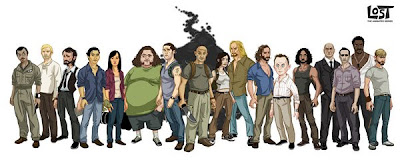
I thik it was this month when we heart about AppVertising, as the end of LOST arrived.

April

Best places to work on Marketing, this list was published. Sincerely, I didn´t find my company on it, so I decide to look for another job. There were also good sites as Haiku Lovers, UTweet from Uniqlo, the Web Trend Map from InformationArchitects and some changes in the website of FullAsAGoog.

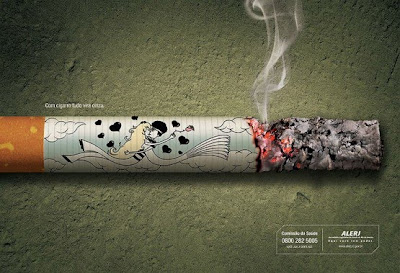
I liked very much this campaign against smokers. In Spain we are the last country to forbid smoking in pubs and restaurants, AntiSmoking Ads
In april I was able to ask for a trial of CS5, so I discoverd rotoscopy and Code Snippets Panels. We also saw kinStudio from Windows. Interesting online campaigns were this from Smart, this other from VolksWagen, blueyourfriends, and all that was done for the promotion of Avatar.


May

We finally found the Flash CS5 Documentation, no doubt this is the best version, as good as CS3, althought they shoud improve the Help.

We had more about the war Apple/Adobe, remember the Adobe campaign "We Love Apple"
and the answer from Apple "We #? Adobe"

I also remember this nice video about it

So, what happened really with this controversy Apple vs Adobe? This is how I see it:

To be truth many Flash programmers hoped to see Flash working on the iPhone. Adobe had prepared the iPhone Packager to compile from Flash to iPhone. It was not this way. The iPhone didn´t have Flash and neither the iPad. Jobs published his "thoughts about Flash" and banned all the app compilation from other platforms different to Objectice C (not only Flash, also Unity). So a war began!!! Mr. Jobs had on his side all his legion of Apple fanboys. They talked about HTM5 again and againg as it was the new Mesias. I remember a great confrontation between Flash friends and Flash not friends. I used to compile all tweets about it in my timeline.

And what happened? Adobe did his best betting on Android. Android grew and grew and the Smartphones market began to use Flash (Blackberry, Motorolla, HTC...) even the new upcoming tablets will have flash. Besides, it was proved that Jobs argues about the Flash processing on smartphones were TOTALLY a lie. Jobs was menazed by the antimonopolistic laws. It was clearly seen that HTML5 was not at his best (will it be as the semantic web that never came?). Android did his best, I bet you Android will pass iOS next year. Not only that, Adobe supported Flash and HTML5 from his speciallity: Technology. We could see in AdobeMax how to compile from Flash to HTML5, Adobe Wallaby: from Flash to HTML5 in one step

Apple gave up about their compiling restrictions, so every Appleboy shut up their mouth. Will we see Flash on the iPhone? We don´t mind. In my opinion, it was not about having or not having Flash, it was about dominating the Advertising market on smartphones and tablets (iAd), good try Mr. Jobs, but you are the Loser!


The Google Job Experiment


I remember May 10th as the "Back to the future Day", or the 0-0 day, I´m talking about Twitter: 0 following 0 followers, you understand me.

Two new campaigns from Uniqlo, ColorTweet and Uniqlo Lucky line.
And this slides about Mobile revolution


June

Essential reading for anyone in Digital
2010 Razorfish Outlook Report
View more documents from Razorfish.
We discovered Adobe BrowserLab and a good research from Eyeblaster which changed its name to MediaMind. Aparecen los banners en Spotify, por ejemplo este de Smart. Blogger amplía sus opciones. Otra campaña de Uniqlo, Sportweet.Lee Brimelow publica el Flash Community Believe Video, sale el iOS4 y está web en recuerdo de Michael Jackson.


July

We saw this interactive piece of Glastonbury 2010 Festival, later the design event #MADMMX, here my revision. I found on the web this place about workflow and advertising agencies, it´s just about one word: Subnormality (I´ve lived this my God!). There was also a Research from Mediamind about online entertainment.

Also it was published the Salary benchmarking of April 2010, you can check results here, besides here´s the AIGA Creativity Salary Survey:

Greenshock released TimeLineLite, and good sites to surf on the web were these ones: search the Troll, the Battle of the Cheetos, Lost in Val Sinestra, this visit to the science museum in London and AudioTool

Another video called Jobs Vader and the iPhone

More slides:

View more presentations from Jasmin Cheng.
Lastly we found the Flash Proffesional Glossary


August

We had a lot of controversy in Spain with this article called Yo gurú (Myself, a guru) related tod SocialMedia gurus. There were also lots of researchs about ROI and SM, banners, CTR, etc.

The main notice was YouTube as a platform to launch creativity and advertising campaigns, as for example this one: Zombie Movie Adventure

We saw the Twitter newspapers (we still see them), the iPhone4 had fails, "we are not perfect" they said. There was also YouTube Show&Tell and this research about planners

View more documents from Heather LeFevre.
The most relevant thing this month was found in Wired: The web is dead!

I would talk here about the AppBubble, or the SocialMediaBubble. They have always wanted to kill things as:
- The web is dead (from Smartphones)
- The microsite is dead (from SocialMedia)
- The banner is dead (from SocialMedia)
- Blogs are dead
- The EMail is dead
- ... It´s all about what do they want to promote...


September

More about technlogy videos:

Future of Screen Technology


We finally found this year campaign (I´m sorry about the one from Arcade Fire) Huge bear attacks after being shot by a hunter! and suddenly all advertising agencies wanted to do the same.

There was also the new online shop from Zara, without any SEO on its first day, othe campaign from Uniqlo, Tweet and discount. Check out also this video about Augmented Reality for Online Shopping.

Websites of September: Scotch-Soda FWA SOTD, with the panning effect, Vokswagen Magazine. 2010 Agency Family trees, and the new Twitter

This month´s videos:

YouTube ShortList

VolksWagen Think Blue
and this youtube campaign abotu the army http://www.youtube.com/officialnzarmy Great!


October

We saw anothe online shop, this time made with Flash, Desigual Great Work! The war for the TV came back: GoogleTV vs. AppleTV. Sites; the blog MadeByMany, this brasilian one, IKEA cats, this experimetal: http://www.thirtyonefps.com/, AModel from Japan, OhMyGodWhatTheFuckBarbaque!!! or OMGWTFBBQ, the campaign about singing tweetagrams from Orange, and this video intro of FlashOnTheBeach 2010:

Very interesting research from Google, 101 Digital Creative Ideas by Google:


This happened on October 10th, 2010:
RT @tw1tt3rart: #42day: 42 = 101010 in binary
▄█░█▀█░▐▌▄█░█▀█░▐▌▄█░█▀█
░█░█░█░█░░█░█░█░ █░░█░█░█
░█░█▄█▐▌░░█░█▄█ ▐▌░░█░█▄█
#twitterart

Nice Richmedia like Gran GRU, launching of Windows Phone and this little advergaming banner. We had also the Vimeo Festival Awards, check the Winners

In my opinion this is the best video of 2010, Coachelletta
A great film was on the screens: #TheSocialNetwork, well done with a great bso. Trent Reznor!!!

Lastlty we had the #adobeMAX I won an UnAward Prize!!!


November

More about the Internet-TV War, this time with Sony Internet TV FWA SOTD Nice site!! Excellent integration of video + Flash + SocialMedia #SonyInternetTV

A Video that called out attention:
Campaigns as Social Media Sobriety Test , and researches as this ones:
View more presentations from @JESSEDEE.

We discover RockMelt, the SocialMedia browser. The NY Marathon had an interactive cober: Maraton + NYTimes + Faces

Another impressive video: We all want to be young!
Facebook Titan was released although I havent tested it yet. More slides:

View more presentations from nbrier.
One hundred inspirational ideas
View more presentations from Helge Tennø.
Nice richmedia from Assassins Creed. Cantona vs Banks, and the inspirational festival in Madrid, I was invited by #mktFan on Twitter, here is my resume.

You should check this doc: Most Contagious 2010
The launching of YouTubeTrends

+ things: IKEA reinventing banners, this microsite from IAB, and the online advertising bit the offline, online reaches off


this is my FollowYear #FY2010:
@davidnavarro, @victorgil, @YahooAdBuzz @simdalom @Cplanner @javiervarela @daniseuba @_EW @JosephLabrecque @adCenter @adage @iab @MSAdvertising @adverblog @adigital_org @iMediaTweet @lineasmarketing @Creative_Zone @MediaMind_chat @AdFreak @Adweek @IAB_Spain @thefwa @dexigner @THESLOGAN @bannerblog @theFlashBlog @mashable @IABUK @adanvecindad @ISO50 @YorokobuMag @smashingmag @y_ahora_que @danigranatta @Flash_Platform @leebrimelow @estherperez @mktFan

More about 2010:

I will continue posting on:

Have a nice year!!!


Thursday, December 30, 2010

Nokia N8

The first time Nokia's N8-00 popped up on our radar was way back in early February of this year. On that chilly, misty morning, we learned of a mythical being capable of shooting 12 megapixel stills, recording 720p video, outputting via HDMI, and -- most importantly -- ushering in the promised Symbian^3 touch revolution. It's been a long road of leaks, teasers, hands-ons, and previews since then, but at long last, the legend of the N8 has become a purchasable commodity. All the early specs have survived, including the 3.5-inch AMOLED display, but the key question today, as it was at the beginning, relates to that all-new software within: does Symbian^3 succeed in elevating Nokia's touchscreen experience or does it drag down an otherwise stellar combination of high-end parts? For that verdict and much, much more, join us after the break.

Let's not waste any time equivocating here, it'll be quite obvious to anyone with a set of eyeballs that Nokia has fashioned one of the most ruggedly handsome devices of recent memory with the N8. In a sea of identikit touchscreen-dominated phones, the N8 manages to stand out, thanks to its (mostly) aluminum construction, wide palette of color options, and atypical mixture of curvy sides and sternly straight lines at the top and bottom. The biggest distinguishing feature will of course be the protruding camera compartment on the back, which houses the world's largest image sensor yet seen in a smartphone, a Carl Zeiss lens, a Xenon flash, and a loudspeaker.
We've got no complaints to proffer about the apparent durability of the handset itself and that extends to this extra bump on the back, but there are a couple of notes worth making. Firstly, the N8 will spend most of its horizontal time resting on the camera section's bottom edge. In our time with the phone we noticed it generated an unpleasant screeching sound anytime we slid it across a flat surface and we imagine over the long run that portion of the body will suffer plenty of wear and tear. Additionally, we found ourselves inevitably fingering the lens every time we held the handset up to make a call. That was just the most natural place for our forefinger to go, which is hardly a deal breaker in itself, but something to bear in mind if you care to keep your imaging equipment immaculately clean (and if you read our camera section below, you probably will care).

We'd be remiss not to also note that the menu key at the N8's bottom left corner feels rather improperly placed. Nokia loves to tout its phones as being designed for single-handed operation, but reaching down to hit the menu key and access its multivariate functions was something of a treacherous activity. We nearly dropped this precious drop of aluminum a couple of times while trying to maneuver our digits over that button, and eventually settled on using a second hand when we needed it.
Aside from those somewhat minor points, the N8 really looks to be continuing Nokia's fine tradition of making phones built to last decades rather than mere months or years. The volume buttons are crowned with handy little nubs for blind operation, the traditional screen-locking slider is also present and accounted for -- coming with a nicely ridged surface and a finely tuned spring mechanism -- and is joined by something of a rarity in smartphones: a two-stage shutter button for the camera, which is also easy to find and operate.

Internals
Much has been made of the N8's use of a 680MHz processor in a 1GHz world, but those numbers are predictably beguiling. The N8 has a separate Broadcom GPU alongside its ARM 11 processing core, which takes over when things get graphically intense and delivers performance that rarely left us feeling underpowered. Couple that with Symbian^3 being able to exploit the graphics processor to perform hardware-accelerated OS animations and graphics, and grunt should altogether be quite adequate for the tasks the N8 is intended to perform. 720p movies were certainly no challenge for this phone. A lot more worthy of critique might be the 256MB memory allowance, which halves what other new phones are coming out with, but again, the argument can be made that Symbian^3 is an inherently more efficient platform and the lower number on the spec sheet doesn't seem to have had a correspondingly negative impact on real world use. In our experience, spanning multiple N8 devices, we only saw a "memory full" error message once -- while viewing a video file on the phone with the calendar open in the background.


The array of additional features is pretty comprehensive too, with 802.11n WiFi, Bluetooth 3.0 plus A2DP, GPS (both the real and assisted kind), USB On-The-Go support, a 1200mAh battery, 16GB of built-in storage, and of course a MicroSD slot for adding up to 32GB more. Light and proximity sensors are joined by an accelerometer and magnetometer in ensuring that there's no unfilled nook or cranny within the N8's aluminum body. Suffice it to say, you won't be lacking for options with this handset.

It's also worth pointing out that a recent teardown of the N8 showed it to be quite friendly to user repairs, thanks to the use of Torx screws throughout, with the battery compartment in particular being only two of those fasteners away from being pried open. It's reassuring to know that even when Nokia moves away from the traditional user-replaceable battery design, it still offers a cell that is accessible to the somewhat more motivated owner. We didn't have the chance to test the battery out in full, but our time with the N8 made a good impression -- we were typically able to get more than a full day's use out of it, though do beware overusing that Xenon flash. The camera was the biggest power drain for us, with its oversized lighting unit predictably being the chief culprit.

The FM transmitter included on the N8 made us smile with nostalgia, as it hearkens back to a time when we actually cared about FM radio waves. In itself, it's a pretty hit-and-miss affair. The hit is that the setup is an utter cinch, asking you only to select the same frequencies on your Nokia and the nearest boombox you've got lying around, while the miss is the fact that we got an awful lot of noise and distortion while trying to listen to our music. Eventually we did position our phone just right for almost flawless playback, but it's a temperamental affair and would require a bit of patience and commitment from the user determined to squeeze every last cent's worth out of his 1985 Technics hi-fi. On a less flippant note, we reckon drivers will really appreciate the transmitter's inclusion, particularly those who have to rent regularly, as it gives them a connectivity mode with unmatched backwards compatibility.

Even happier news were found on the video transmission front, where we were able to drop a downloaded .mkv file off from our MacBook Pro and onto our N8 just through OS X, without recourse to any additional software, before exploiting the phone's HDMI connection to pump the video out to our home cinema projector. It was easy and straightforward, and having Matroska format compatibility right out of the box is very nice indeed.

Display
 We've got two words for you: Gorilla Glass. We had to confirm this with Nokia since nobody seems to have bothered to make an official announcement on the matter, but yes, the N8 comes with the bulletproof scratch-resistant glass that's garnered so much admiration since making its mainstream debut on the Motorola Droid. We scratched, clawed, poked and prodded the N8's front, but nothing we did caused it any discomfort. That's just what we've come to expect from these Gorilla Glass screens, which offer a real sense of assurance when plopping your expensive gadget into a pocket or in a bag that includes more than just fluffy toys.

What lies beneath it is a 3.5-inch AMOLED display stretching to 640 x 360 resolution. That's obviously not the densest panel you can own anymore, but neither is it a slouch. The N8's vibrancy and color saturation look highly accurate while the auto-brightness guesses correctly most of the time and gives you enough power -- unless you've got the sun shining directly down on the phone, of course -- to get on with your Symbian^3 business. That resolution is really the only thing holding this display back, but it's not like Nokia can do too much about it now.
http://www.engadget.com/

Wednesday, December 29, 2010

iPhone 4: The Definitive Guide


We already showed you the new iPhone from every angle, inside and out. Today, Steve Jobs re-revealed it, telling us about the remaining details. Here's the exhaustive guide to all the features of the new iPhone 4.

The design

The hardware design hasn't changed from the one we already knew about. It uses the same materials as the prototype: Black glass and stainless steel rim. It fits with the rest of the Apple product line, from the hard edges to the Dieter-Ramsesque utilitarianism of the iMac and the iPad.
The black glass is aluminosilicate glass. Apple claims this glass is "chemically strengthened to be 20 times stiffer and 30 times harder than plastic." According to them, this makes it more scratch resistant and durable than the previous generation.

The size is smaller than the previous generation: 34% thinner than the iPhone 3GS. Although it is 3 grams heavier. According to Apple, it's the thinnest smartphone ever. It has split buttons for volume, unlike the current iPhone 3GS, all made in stainless steel.
The stainless steel rim
The stainless steel rim gives the structure to the iPhone, and acts as part of the antenna for 3G and Wi-Fi. In theory, this will greatly increase the reception abilities of the new iPhone 4.
Physical size
The iPhone 4 is 4.5 x 2.31 inches, and 0.37 inches thick. It weighs 4.8 ounces (137 grams).

The hardware

The new big brain
It has an Apple A4 chip inside, just like the iPad. Inside the A4 there are a few interconnected chips: A Cortex-A8 main processor unit—the main brain—paired with a PowerVR SGX 535, which handles the high definition graphics of the new iPhone. These are directly connected with each other and two low-power 128MB DDR SDRAM chips. Since all these components are in the same chip, Apple claims the iPhone 4 can process data more quickly while consuming less battery than before.
The A4 also consumes less power because its sub-components can be switched on and off when they are not needed, shaving watts whenever it's possible.
Battery life
The battery is 16% bigger than the current one. Coupled with the A4 processor and new display, it results in a longer battery life: Apple claims 40% more talk time. Here are their figures:
• Talk over 3G: 7 hours.
• Browsing over 3G: 6 hours.
• Browsing over Wi-Fi: 10 hours.
• Video: 10 hours.
• Music: 40 hours.
• Stand-by: 300 hours.
The display
The 3.5-inch multitouch screen has a resolution of 960 × 640 pixels. Apple calls is the Retina Display, and it has four times as many pixels as the current iPhone 3GS' display. The screen has 326 pixel per inch resolution, a higher definition than your typical magazine, a quality that shows in the screenshot.
 Apple claims that this IPS-based display—the same technology as used in the iPad—also has 800-to-1 contrast ratio which is four times better than the 3GS, with a higher viewing angle.
The apps will take automatic advantage of the increased relative resolution, which mean they will be a lot sharper for text, 3D graphics, and vectorial art. However, developers will need to include higher resolution bitmap images to make the app look perfect.
Like the iPhone 3GS and the iPad, the display has an oleophobic layer that makes it easier to clean.
The main camera
The new iPhone has a bigger sensor for the main camera. It's backlit and has bigger lenses too. Instead of having a higher resolution, however, the sensor maintains the same 5 megapixel count. They are bigger dots, however, so it has a higher ISO—or sensitivity to light. That means that you would be able to take better photos and video in low light conditions, and your pictures will look a lot better.

The camera also has a LED-based flash, which works both for photographs and video. To focus, both for photographs and video—you just need to tap on the screen.
The video conferencing camera
In the front, there's a video conference camera, with standard VGA resolution. This camera will be used with third-party applications, as well as Apple's own video conference solution.
Gyroscope
The new iPhone 4 has a gyroscope built-in. This means that it can track movement with a very high precision, much higher than the built-in accelerometers in the previous iPhones. It's 3-axis, so it's capable of detecting pitch, roll, and yaw. Couple with the accelerometer, you have 6-axis motion sensing.
Other
• Like the iPad 3GS, the new iPhone uses the new micro-SIM standard.
• It has an additional microphone on the top used for noise cancelation.

The software

iOS4
The new iPhone 4 comes with iOS 4, a new moniker for the iPhone OS. The biggest new feature is, of course, selective multi-tasking, Apple's way to multitask some application features without consuming too many resources and battery power.
 The new iOS 4 supports Apple's Retina display using resolution independence. This means that applications will automatically get scaled for the new resolution, but looking sharper, not pixelated. That includes typography, 2D vector graphics, and 3D graphics. However, developers will have to include higher resolution images for buttons or other screen controls (something that many have already, since this was already exposed in the last WWDC).
Video calling
However, the biggest feature of the new iPhone 4 is probably video calling, thanks to its front camera. Apple calls it FaceTime, and it works iPhone 4 to iPhone 4 over Wi-Fi—at least for 2010. Apple claims that in the future it will be available over 3G.
The iPhone 4 can use both cameras for video calling, so you can broadcast what is in front of you to another iPhone 4.
iMovie for iPhone
The new iPhone 4 will be able to use a new editing software from Apple: iMovie for iPhone. It comes with 1,500 new features.
The new iMovie for iPhone works on even 720p high definition. You can use it to cut the video clips, add automatic Ken Burns effects for still images and a music soundtrack taken from your iPhone's tunes. After you are done with your movie, you can export it to 360p, 520p, and 720p.
It's a separate application, however, it doesn't come built-in with the iPhone 4.
iBooks
iBooks will also be available for the new iOS4. Apple claims that the new iPhone 4's 325 pixel-per-inch display will make the books perfectly readable. It will use the same controls as the iBooks application in the iPad.
http://gizmodo.com/5557101/iphone-4-the-definitive-guide

Tuesday, December 28, 2010

Samsung NX100 Brief Hands-on Preview

Preview based on a pre-production Samsung NX100
Samsung was the first company outside the Micro Four Thirds consortium to release a mirrorless interchangable lens camera. The distinctly DSLR-like NX10 made little fuss about its mirrorless construction, concentrating instead on offering familiar capbilities and behavior in a smaller body with smaller lenses. Now its sister model, the NX100 takes a slightly different approach - it eschews the traditional styling of the NX10 and instead embraces the simpler silhouette of a compact camera. And, although its stylistic minimalism makes it appear somewhat monolithic, it's almost identical in size to its obvious peers - the Panasonic GF1 and Olympus E-P2.
The camera's more compact dimensions make sense of Samsung's previously announced 20-50mm F3.5-5.6 'compact zoom lens' that arrives alongside the NX100. It's a retractable zoom that is immediately reminiscent of the Olympus 14-42mm kit zoom for Micro Four Thirds. It isn't image stabilized and, starting at 30mm equivalent, isn't quite as flexible as most kit zooms (which tend to start at 27 or 28mm equiv), but it does mean the camera package remains nice and small even with the zoom mounted.
The underlying specification is pretty similar to the NX10 - it utilizes the same 14.6 megapixel sensor, battery and lovely VGA-equivalent OLED screen but it gains a range of features and tweaks that NX10 owners will hope to receive in future firmware updates. However there's one notable omission - the NX100 doesn't have a built-in flash.
Probably the biggest gain is a feature Samsung has called i-Function. The two lenses launched alongside the NX100 - there's a 20mm F2.8 prime as well as the 20-50mm - both feature an 'iFn' button on their left flanks that allow the focus rings to be used to control various camera functions. Depending on shooting mode iFn can be used to adjust shutter speed, aperture and exposure compensation with the option to add ISO and white balance, depending on how you plan to use the camera.
In addition there are a series of changes that help make the camera more customizable - the option to select the highest ISO value the camera will use in Auto ISO, for instance. In themselves these are small changes but they're the kinds of options that allow users to better tailor the camera to their way of working, which we like to see.

The NX100's unadorned design makes it look rather large but it's of a similar size to the Olympus E-P2 (and, consequently Panasonic's GF1), despite using a larger sensor. It can't compete with the whittled-down minimalism of Sony's NEX-5 though.
  When the standard kit zooms are taken into account, the NEX loses some of its size advantage, particularly against the Samsung and Olympus which have retractable zooms. However, while the Olympus and Sony both offer ranges of around 28-82mm equivalent, the Samsung offers the more restrictive 30-75mm. It's also worth noting that both the other combinations here offer image stabilization, either in the camera or in the zoom lens, which the Samsung doesn't.

Foreword / notes

If you're new to digital photography you may wish to read some of our Digital Photography Glossary before diving into this article (it may help you understand some of the terms used).
Conclusion / recommendation / ratings are based on the opinion of the author, we recommend that you read the entire review before making any decision. Images which can be viewed at a larger size have a small magnifying glass icon in the bottom right corner of them, click to display a larger image in a new window.
To navigate this article simply use the next / previous page buttons or jump to a specific page by using the drop-down list in the navigation bar at the top of the page. You can support this site by ordering through the affiliate links shown at the bottom of each page (where available).
This article is protected by Copyright and may not be reproduced in part or as a whole in any electronic or printed medium without prior permission from the author.
Dpreview use calibrated monitors at the PC normal gamma 2.2, this means that on our monitors we can make out the difference between all of the grayscale blocks below. We recommend to make the most of this review you should be able to see the difference (at least) between X,Y and Z and ideally also A, B and C.

http://www.dpreview.com/previews/samsungnx100/