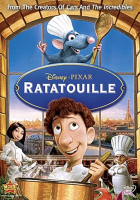
Pixar Animation Studios (June 29 2007), Walt Disney Home Entertainment (November 6 2007), single disc, 111 mins plus supplements, 2.39:1 anamorphic widescreen, Dolby Digital 5.1 Surround EX, Rated G, Retail: $29.99
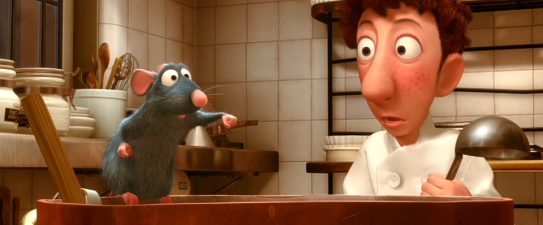
 Of course, back then, Ratatouille was Geri’s Game’s Jan Pinkava’s baby, and conceivably even more offbeat than what has eventually been served up by Brad Bird’s rewrite and final direction. With the story not gelling (or indeed, being toouncommercial), Pinkava was off (he gets a contractual co-story note and very small co-director credit somewhere in the end title scroll) and Bird, fresh from his Academy Award winning turn on The Incredibles, was brought in ostensibly for a rescue operation. With negotiations between Pixar and Disney coming to a close, it seemed that this odd little rat movie would be their next joint venture, and a named director like Bird undoubtedly soothed some anxious executives’ minds. They needn’t have worried…what Bird brings to the idea is his unparalleled eye for animated filmmaking. Ratatouille is easily his best computer animated film, though whether it touches the more emotional The Iron Giant is open for debate. Certainly for all the pyrotechnics of The Incredibles, Bird matches them in Ratatouille with huge portions of high comedy and bravo displays of cinematic verve.
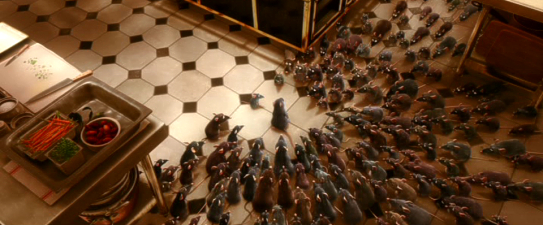
He truly makes Ratatouille his own, evident from the Incredibles-like opening that provides a quick pre-filmed/televised recap of a pivotal character’s past. By the third spoken line in, you know you’re in good, masterful hands. In fact, I started enjoying myself so much that 40 minutes had passed before I realised 40 minutes had passed and I had forgotten to make any notes, such was the enjoyment factor of the film. One word I found while compiling my thoughts simply said “brilliant!” It only goes to show how much an animated film needs – apart from great animators, of course – a fantastic director who truly understands the medium, which makes the phoney numbness of the likes of Beowulf even more embarrassing by comparison. Certainly there was a little grumbling from Robert Zemeckis’ new motion capture unit at Disney’s when Ratatouille proudly announced that “no performance shortcuts” were used in its production! From the perfectly French stylised humans and Remy’s beating heart breathing, to the onslaught of a rabble of running rats,Ratatouille inevitably succeeds in looking so much more real than Beowulf because it isn’t supposed to look real.
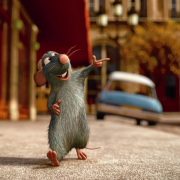
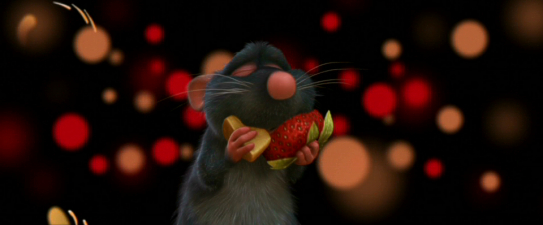 It’s true that the design of our hero Remy isn’t the most original: comparisons to the Sesame Street Muppet Grover persisted with me whenever Remy hit an appropriate pose, even though this thought had come and gone in my mind when Ratatouille was served up in theaters earlier this year. At that point, ask anyone which film would have won the box office battles between an animated comedy about a chef-wannabe rat or the latest Catherine Zeta Jones “sophisticated comedy blockbuster”, also set in the kitchen, and the smart money could well have been on the lady, but it’s just another example of how Pixar’s writing process, refined and finalised by Bird here, can rise above the animation ghetto: Ratatouille is premium filmmaking, period. It’s just as sophisticated as a “true” French picture: at times I felt I was watching some amazing European animation from an independent studio rather than an all-guns blazing big-budget studio feature made predominantly by some crazy Californians!
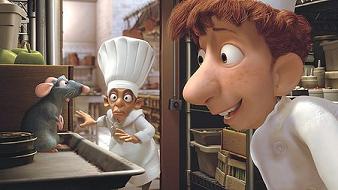
Much of this is down to Michael Giacchino’s absolutely wonderful score, as varied, unique and original as the film itself. He shies away from the usual “Hollywood French sound” but still manages to have things sound distinctly Gallic, going for flirty flutes and bubbling bass lines that create the perfect texture to go along with Bird’s always moving, always involving images. Although it’s not the first time such convention has been used in animation, it’s also very clever how Remy and his human friend Linguini can understand each other but cannot actually speak to each other. It’s in these moments that Pixar show their amazing prowess with pantomime – Remy arguably works even stronger when he’s unable to speak to Linguini and remains mute – the level of personality acting should be inspiration to any would-be future Pixarians and does nothing less than raise the animation bar absurdidly high. Next summer’s WALL-E can’t come fast enough.
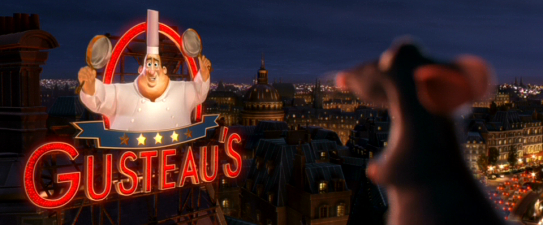 Apart from Bird’s superlative direction and Giacchino’s sublime score, specific mention should be made of Sharon Calahan and Robert Anderson’s cinematography and Darren Holmes’ editing, which both do wonders in helping to createRatatouille’s world and keep it alive. If only animated films could be judged on their filmmaking merits as opposed to being stuck in a fairly thankless category of their own. There’s real cinematography going on here, and carefully thought out editing that’s the best I’ve seen in major picture making for a good while…smooth and transparent as it all should be. As are the voices, not a huge name among them (apart from Peter O’Toole’s food critic), making a refreshing change where the characters can shine without the heavy burden of celebrity personalities filling in the gaps for poor writing:Ratatouille doesn’t need them since its characters are so well rounded, and since most are pulling off French accents, even the likes of Ian Holm, Brian Dennehy and baby bowler Janeane Garofalo go incognito.
 Not that Ratatouille is all perfect. Patton Oswalt’s narration as Remy can feel heavy handed at times, possibly the result of Bird using Pinkava’s sequences in a new arc (Ratatouille, even with Bird’s name as writer-director, still feels more Pinkava’s concept with Bird’s clever but glossy coating). The film does flirt dangerously close to being overlong, but even then it’s only by five to ten minutes, if that, and if Ratatouille does begin to dip towards the end, a couple of twists – which cleverly never feel too convoluted – keep things interesting. A lack of true darkness or heavy dramatic scenes prevent Ratatouille from being just shy of beating all-time classics as Pinocchio, and even though, as with The Iron Giantand The Incredibles, Bird isn’t afraid to show death; as well as a few passing references throughout, there’s also a starkly shocking moment that comes and goes all too fast in an otherwise bright and happy movie. I also noted two instances of repeated gags: the “smell” of food, distinctively visualised in a swirl of warm, enticing imagery, and a terrific comedy line involving one character being another’s figment of their imagination. Both moments play out so wonderfully early on in the picture than when they’re repeated later on, it feels as if the filmmakers were stumped on how to top themselves in these brief moments rather than attempt something alternate.
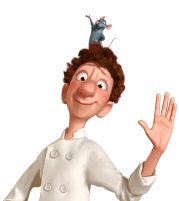
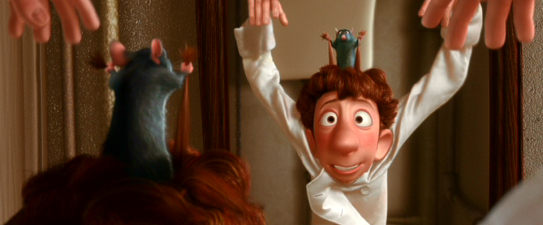 But those are teeny nit-picks: for practically all of its running length, Ratatouille simply out and out entertains like no other animated feature since The Curse Of The Were Rabbit, pulling the sometimes formulaic Pixar in completely new directions. Even the clips I’d seen lots of times in the previews wowed and made me laugh again. Suspension of disbelief at such an outrageous idea as a rat who is able to cook with human assistance by hiding under a chef’s hat and yanking Linguini’s hair to cause convulsive movement is expertly handled: not since Superman flying or the resurrection of the Jurassic dinos will you accept the onscreen shenanigans without thought. As well as being a winning combination of technical exuberance and delightful gentle whimsy, Ratatouille is also Pixar’s first out and out romantic picture, with the relationships between Linguini and his secret sweetheart Colette as strongly written as anything in supposed more “smart and sophisticated” fare. A secondary sub-plot kicks into action fairly late in the game, but this only has the result of letting the first half breathe, allowing the sub-plot to boil nicely and build to an exciting climax.
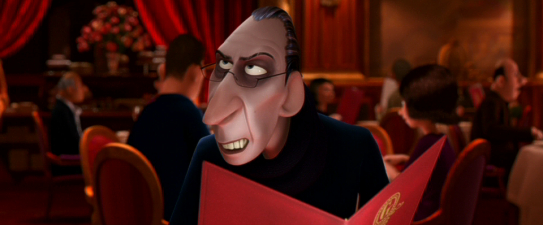
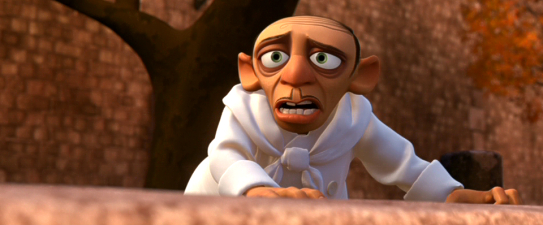
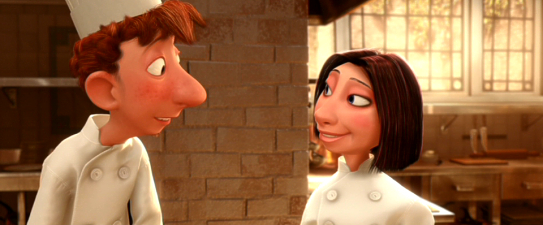 There are some pure strokes of genius in the movie too: Linguini’s secret relationship with Remy isn’t blown but revealed by the pair themselves in a very nice moment in a film full of very nice moments. Ratatouille happily gets away from the buddy-buddy or cute relationships often found in Pixar’s movies and really strikes out to create believable humancharacteristics, even among the rats themselves. Even the “heavies” of the piece – O’Toole’s Burtonesque, Bowler Hat Guy-like Anton Ego (surely a take on Egon Ronay?) and disgruntled head chef Skinner – come off as either happy to be proven wrong, or comically designed so as to not take them too seriously, respectively. Ego has been suggested as a poke back at critics in general, but it’s not an argument I’m going to concur with, since he…well, you’ll need to see the film. Holm’s Skinner even reminded me of Bird’s Edna Mode a little, but I found a lot of Herbert Lom’s Inspector Dreyfuss from the Pink Panther movies in the character, whom one could never really take as a real threat.
 Despite the supposed low box office run, Ratatouille is a delightful dish, prepared exquisitely and cooked to perfection, with very little fat and a flavor one can really get their teeth into. I wouldn’t even look at those theater numbers or take them seriously: Disney had an uphill struggle to market an odd little film and, placed between huge juggernaut franchise pictures, Ratatouille did very, very well to hold its own. Its strengths are currently being found in its international rollout, where the film is playing gangbusters in – where else? – Europe. In this day and age of hyper graphics, shouty voices and paper-thin plots, it’s so pleasing that genuinely talented people can still put out genuinely entertaining stories like this that all ages can enjoy. It is smart: a rare animated film that’s never in danger of being dumbed down for the kids and indeed feels more sophisticated than many “adult” comedies; as with the classic Looney Tunes, the film feels made with its crew in mind first and the needs of the young second, but never forgotten. I could keep gushing about Ratatouillebut my best advice is that you run out and catch this totally unique and original animated film. It’s a true feast for eyes, ears and the heart. And the food looks good enough to eat!
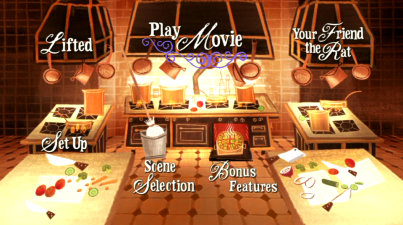 As usual for a Pixar disc, there’s no Disney FastPlay system in effect, so the disc works with the usual previews for upcoming product (and the new, slightly odd promo for nothing other than the “Disney” brand that strangely uses Michael Kamen’s music for Robin Hood: Prince Of Thieves). Those featured are the teaser for WALL-E (in anamorphic widescreen), Disney Movie Rewards, One Hundred And One Dalmatians, Snow Buddies and The Pixar Short Film Collection(again anamorphic). Though all of these can be bypassed by hitting the Menu key on your remote, none of them can be later accessed in any usual Sneak Peek option.
Providing the token peek behind the scenes, a handful of Deleted Scenes start off with a cool single alternate opening shot that swoops in from Paris, through Gusteau’s restaurant and into the back kitchen. Director Brad Bird points out, in his brief but welcome intros, why this was changed but it still does seem to have inspired the Main Menu animation, which brings us into Gusteau’s kitchen in such a way through delightful limited animation that recalls Disney’s 1960s Xerox period. In a Pay All configuration, the three deleted scenes play for just over 15 minutes with Bird’s comments, in anamorphic widescreen using animated storyboards. The “Presented with score from Ratatouille by Michael Giacchino” is perhaps a contractual obligation, but it still feels cluttered and appears at the top end of each clip. Despite some very impressive concepts (I would still argue that, even if not at the opening of the film, there would still have been room to show more of the actual restaurant, which we never get a real sense of), Bird states his reasons for chopping or changing these moments clearly and intelligently, and often his remarks give insight into the rest of the film in lieu of a real commentary track.
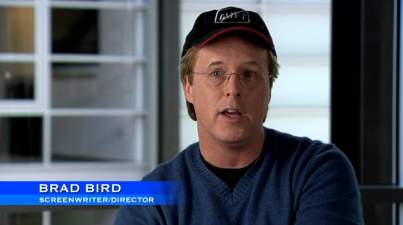
 Fine Food And Wine: A Conversation With Brad Bird And Thomas Keller finds the director talking movies and grub with the esteemed chef. Running to almost 14 minutes in anamorphic widescreen, the “conversation” is set up by producer Brad Lewis, who compares each man’s working methods and the way the various ingredients are thrown into each mix to create a tasty result. While Bird gets in few words about creative filmmaking in the first half, the featurette leans more in favor of Keller and his The French Laundry eatery, which gets a lot of exposure. Things swing Bird’s way towards the end, when footage of his Tortoise And The Hare film he made as a kid is shown and he elaborates on how he got into the animation business. Even with these comments, though, the piece has little to do with Ratatouille per se, and that it’s been cut together from two different interviews doesn’t really lead to a smooth final product, ultimately feeling confused and choppy. If you want to keep the kitchen analogies coming, it’s like sweet and sour have cancelled each other out, leaving an unsatisfactory bland flavor. I actually resorted to trying to make out what the animators have on their shelves, the answer being that Pixar’s guys obviously take a lot of interest in other studios’ computer animated movies.
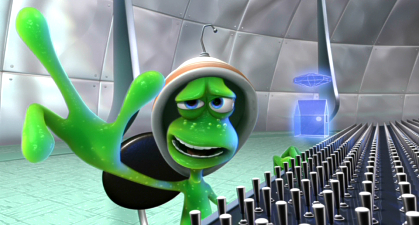
 That’s technically it for the bonus features, since the remainder can all be found from the disc’s Main Menu. A Pixar big screen tradition are their wonderful animated shorts that play on the front of their features in theaters, and thetheatrical short Lifted is first up. Also just released as part of the Pixar Shorts collection, Lifted’s transfer here looks pretty much the same file, running five minutes in 1.85:1 anamorphic. The story of an oddball alien who brings his ship down to Earth to extract a perfect human specimen with many unforeseen and comical circumstances, Lifted might have perhaps made a better paring for release with The Incredibles, while that film’s Boundin’ or even last year’s One Man Bandwould have proven a more appropriate switch for release, considering the shared sensibilities, with Ratatouille. This short is definitely more along classic cartoon lines – with some lovely nods to Close Encounters’ lighting design and its John Williams music stabs – and is funny, but has simpler textures, a less intricate than usual detail, and more in common with Sony’s The ChubbChubbs, particularly in little Stu’s character design, than perhaps it should. For all the toying with gravity, it lacks weight, no pun intended, which could well have contributed to the lack of an Oscar win earlier this year. Long-time Pixar sound designer Gary Rydstrom jumps from mixing desk to director’s chair, but to hear his commentary on the short, you’ll need the Pixar Collection as it’s not replicated here.
 Despite a lot of enthusiasm for it online, I have to admit to not being overly impressed with the final DVD bonus, the all-new short Remy And Emile Present: Your Friend The Rat, A History. Ratatouille’s director Brad Bird obviously comes from a traditional animation background, and he’s been able to pepper even his two CG films with a little of the classic look in the credit sequences. Ratatouille takes things to extremes, creating new animation for its end titles, the style of which has been carried over into the disc’s menu designs and this addition. While it’s fantastic to see the 1960s Xerox Disney approach back on screens, Your Friend The Rat is overlong at eleven minutes plus, when a tight six-to-eight would have left ’em wanting more. Although the short contains a few shots created in CG (and even some in stop-motion!), it’s predominantly been hand animated and as such recalls Disney’s 1950s and 60s films like The Truth About Mother Gooseand Toot, Whistle, Plunk And Boom, which look to be obvious inspirations and mix entertainment with educational elements in the same manner. The first half is great, very much in those classics’ vein, but a capping song is markedly devoid of life or zip and the film loses momentum long before a final half fun/half serious disclaimer joke. Writer/director (and Ratatouille story man) Jim Capobianco’s short is enjoyable enough, but the fact it marks Pixar’s first hand drawn cartoon makes much more of a big deal out of it than should be. The golden rule of “less is more” certainly should have been applied here, though it’s great to see Alex Woo, of Rex Steele: Nazi Smasher fame back working in two dimensions after being part of the Pixar family for the past couple of years.
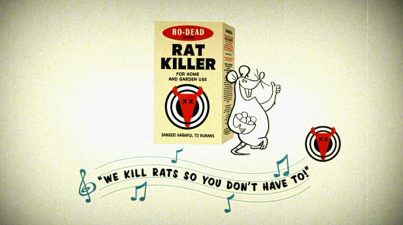
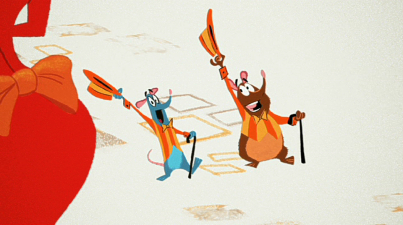 Finally on the Main Menu, let things run a little while and you should manage to come across a couple of Easter Eggs. Hover between the Your Friend The Rat and Bonus Features options, and soon a little tail-like rat squiggle should appear: selecting it leads us to a short one-minute clip on some of the other possible titles for Ratatouille; my favorite is perhaps “Cookin’ With Rats” or “The Cutest Little Chef In France”! Back on the Main Menu, and after that squiggle disappears, hop over between the Lifted and Set Up entries to catch another one: this will play a very short joke commercial for Ro-Dead rat killing spray.
 While two other basic requirements (a commentary with Bird and the film’s two or three teasers and trailers) could have been simply additions and made the package feel much, much more substantial, it does seem that from here on in the message for collectors is to jump on the Blu-Ray wagon in order to sample the many added value features we used to take for granted. It’s a shame that both companies feel this is in their best interests; with Blu-Ray Disc sales not much more expensive than standard DVD, surely the inclusion of a few more basic features on the standard editions would benefit fans without taking away from the very reason to buy the Blu-Ray: to get the actual movie in hi-def?
Storyboard:
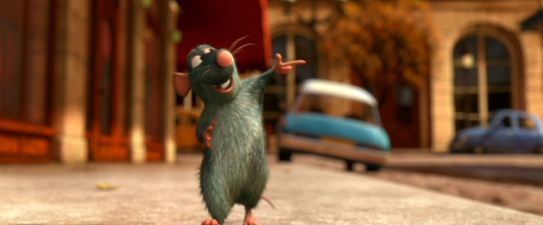
Auguste Gusteau’s motto that “anyone can cook” is really put to the test when little Remy finds himself in Paris and dreams of becoming a gourmet chef. There’s only just one teeny, tiny problem…Remy is a rat!The Sweatbox Review:
What can be said that hasn’t already been said about this year’s clear animation winner? Essentially, all the good things you’ve heard about Ratatouille are true: the bad things are not. Although with their stunning track record, and only Carsbeing the slight creative dent in their gleaming fender, Pixar’s latest was apparently a hard sell for Disney’s marketing team, not least because the film was in production before the Mouse bought the Lamp late last year. Think about that:Ratatouille was in production as a full length animated feature film long before there was any prospect of secure distribution. There was perhaps no doubt that someone wouldn’t have snapped up anything the company tried to put out, but Pixar was, in effect, independently creating a movie whose lead character was a creature many couldn’t even bear to think about watching, with a decidedly uncommercial setting and oddly non-mainstream tone. That’s a pretty brave move for anyone, especially when you then saddle it with a title that no one could apparently pronounce!He truly makes Ratatouille his own, evident from the Incredibles-like opening that provides a quick pre-filmed/televised recap of a pivotal character’s past. By the third spoken line in, you know you’re in good, masterful hands. In fact, I started enjoying myself so much that 40 minutes had passed before I realised 40 minutes had passed and I had forgotten to make any notes, such was the enjoyment factor of the film. One word I found while compiling my thoughts simply said “brilliant!” It only goes to show how much an animated film needs – apart from great animators, of course – a fantastic director who truly understands the medium, which makes the phoney numbness of the likes of Beowulf even more embarrassing by comparison. Certainly there was a little grumbling from Robert Zemeckis’ new motion capture unit at Disney’s when Ratatouille proudly announced that “no performance shortcuts” were used in its production! From the perfectly French stylised humans and Remy’s beating heart breathing, to the onslaught of a rabble of running rats,Ratatouille inevitably succeeds in looking so much more real than Beowulf because it isn’t supposed to look real.
Much of this is down to Michael Giacchino’s absolutely wonderful score, as varied, unique and original as the film itself. He shies away from the usual “Hollywood French sound” but still manages to have things sound distinctly Gallic, going for flirty flutes and bubbling bass lines that create the perfect texture to go along with Bird’s always moving, always involving images. Although it’s not the first time such convention has been used in animation, it’s also very clever how Remy and his human friend Linguini can understand each other but cannot actually speak to each other. It’s in these moments that Pixar show their amazing prowess with pantomime – Remy arguably works even stronger when he’s unable to speak to Linguini and remains mute – the level of personality acting should be inspiration to any would-be future Pixarians and does nothing less than raise the animation bar absurdidly high. Next summer’s WALL-E can’t come fast enough.
Is This Thing Loaded?
With the debut of Blu-Ray high definition and Disney’s whole hearted adoption of that format, the only way to delve deep into Ratatouille’s world and the secrets behind it is to go Blu and work your way through the multiple documentaries and extra features found on that version of the movie. For standard DVD viewers, Ratatouille’s debut on disc goes the way of recent CGI Disney offerings Chicken Little, Cars and Meet The Robinsons by providing a handful of niceties, the all-important new animated short and a catch-all featurette…slim pickings for the Pixar kind of movie that used to get double disc editions. However, and again like those recent slimline discs, there’s nothing apart from a lack of commentary (whichRobinsons managed to squeeze in) that really feels “missing” here, the processes of making these films well covered previously, even though it’s nice to be able to peek into earlier versions and see the development and catch the vocal cast in action.Providing the token peek behind the scenes, a handful of Deleted Scenes start off with a cool single alternate opening shot that swoops in from Paris, through Gusteau’s restaurant and into the back kitchen. Director Brad Bird points out, in his brief but welcome intros, why this was changed but it still does seem to have inspired the Main Menu animation, which brings us into Gusteau’s kitchen in such a way through delightful limited animation that recalls Disney’s 1960s Xerox period. In a Pay All configuration, the three deleted scenes play for just over 15 minutes with Bird’s comments, in anamorphic widescreen using animated storyboards. The “Presented with score from Ratatouille by Michael Giacchino” is perhaps a contractual obligation, but it still feels cluttered and appears at the top end of each clip. Despite some very impressive concepts (I would still argue that, even if not at the opening of the film, there would still have been room to show more of the actual restaurant, which we never get a real sense of), Bird states his reasons for chopping or changing these moments clearly and intelligently, and often his remarks give insight into the rest of the film in lieu of a real commentary track.
Case Study:
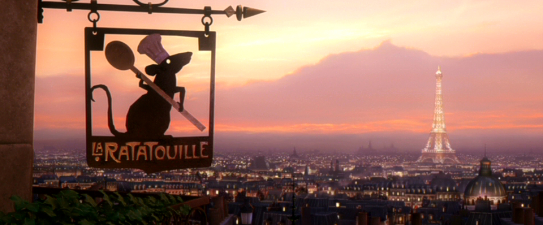
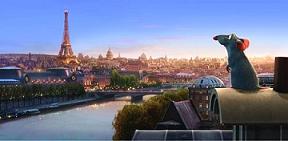
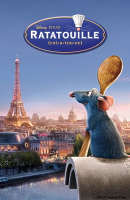
Thankfully dropping the fun but slightly patronising phonetic pronunciation spelling from beneath the title, Pixar’s movie comes to disc as plain Ratatouille. The cover art goes for Disney’s usual center logo heavy format, with the four basic characters – and the Eiffel Tower, hey it’s set in Paris, right? – represented on the front, and another Eiffel Tower – did we mention Ratatouille was set in Paris? – on the back, along with some very uninspiring text and a much nicer “menu” that lists the extras and tech specs, though oddly not the 2.39:1 aspect (going for “Original Ratio” only). Inside, there are the Disney Movie Rewards and Ratatouille Sweepstakes codes, a chapter index/bonus feature listing, and a 16-page booklet that promotes Disney’s current DVD and Blu-Ray slate, including $10 off for those upgrading from standard to hi-def Ratatouille and a few other non-movie related (Remy advising a switch to energy saving light bulbs?) offers.Ink And Paint:
As with many new films coming to disc in their same release year – and certainly those created and transferred digitally – there’s really not a lot to complain about with Ratatouille’s presentation on disc. The 2.39:1 ratio is retained, and even though this should be a given, it’s worth noting that most G-rated pictures at least offer a fullscreen version “for the kids”. As noted, the back cover doesn’t actually note the screen dimensions per se, leading one to wonder if bringingRatatouille to disc as intended was something of an issue. No matter, it’s here just as it was created, and looks stunning if ever so slightly soft, which seems more to be a production design aim and not anything to do with compression. The hi-def Blu-Ray release is sure to show up Remy’s fur and those many food feasts even more clearly!Scratch Tracks:
Presented in Dolby Digital 5.1, Ratatouille is another brilliantly involving track from Pixar’s friends at Skywalker Ranch, and the EX encoding ensures it sounds as good as what DTS might have offered. The multi-layered sounds, directional effects and vocals are wonderfully mixed in with the dialogue, and not once was there a need to adjust volume. It’s a dynamic soundtrack, with many nuances that help the smaller moments work while letting the big moments blast. A less than special Dolby 2.0 mix is presented for those without surround capability, but I’ve had much rathered a commentary track to take up that redundant space. English subtitles are included, but there are no French or Spanish subs or dubs offered. The Audio/Video Set Up guide plays like a Ratatouille-themed version of the THX Optimizer that used to be found on Pixar discs, providing a way for viewers to calibrate their systems so that you can watch the movie as Brad Bird intended.Final Cut:
Near top marks all around for me. Ratatouille is superlative filmmaking that should be enjoyed on all levels. Despite full marks, it’s not a perfect film, but strives to entertain so much, and does it so effortlessly, that’s it’s hard not to fully embrace it with both hands, especially after the diet of pop-culture filled, hyper talkative run of animated creature features. Ratatouille cleanses the palette and sees Pixar jump ahead of the game once again both in terms of technical ability and movie making maturity. The standard DVD comes as disappointingly unloaded as any of the recent Disney releases, thereby practically forcing an unfair jump to Blu-Ray as well as not treating Ratatouille to as many goodies as it deserves. Even though this special film has only received less than standard treatment, if you didn’t catch it in theaters, you should add Ratatouille down on your shopping lists as a vital ingredient to a hugely rewarding night in for the whole family.Animated Classic Or Back To The Drawing Board?
 |      | |||
 |  | |||

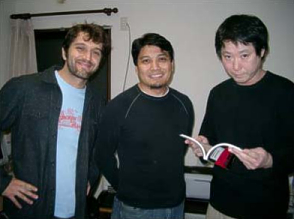
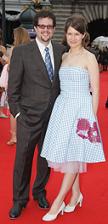 Michael Giacchino: Being in Paris was fantastic! I had the greatest time. It was the best place to see that movie. So, I took my whole family, we all went. Being there and seeing it with my kids in French, with my kids was the best moment. It was really nice being in a theater in Paris watching it all in French, no subtitles, just the way it should be, you know. It was a great experience. And also, working with the French singer Camille [pictured with Michael, right] on Le Festin, the title song, was a great experience, too. She was just wonderful. I don’t know if you know how I came to find her. It’s a very strange story…
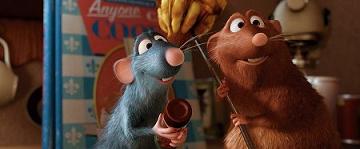 MG: It was interesting. At first, they had wanted some sort of old-fashioned kind of typical French-sounding song for this one section of the film and I really felt that we should do something different, something special to what the movie is. Because the movie itself was so different, so special. I wanted the song not to be something that was cliché of what we consider French. I wanted it to just be a good song that hopefully could last for years, because the film would be on for ever. I just wanted to do something that was right for the film, and the song really comes out of the main theme of the film.
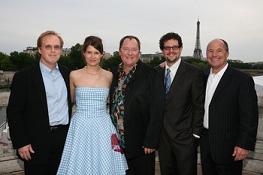 MG: That’s how he operates. He doesn’t want to do something unless it’s going to be original and different and tells what might be a familiar story in a different way. It’s the same in matter of music. He does allow me to kind of mess around and come up with my own ideas. It’s not the kind of thing where he’s so forceful about what he thinks he needs. He has his basic ideas, what he wants and really leaves the construction of it up to me, which is really nice. Then we can work together. What I really enjoy is my time on the scoring stage with him because we can work together, we can listen to it and say: “wouldn’t it be better if we did this?” and then we change it right there on the spot. That’s always a really fun thing to do. Working with him, he really has a way of getting everyone’s creative best out of them. He has a good way of kind of energizing his group, which is really amazing because, you know, he asks nothing less of himself as well. It’s the same thing.
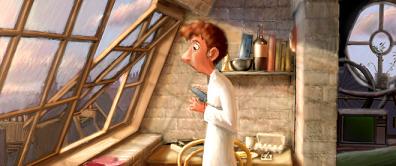
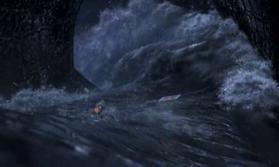 MG: We actually wrote a cue for that, but very early on, even before we recorded it, we knew we weren’t gonna use it. But we recorded it anyway. It was just one of those things like “well, let’s record it to have it”. But we were looking for spots not to have music and I think that was the perfect example of a place where you needn’t to heighten the drama or the fear of what was happening by adding music because that was already there. There is a point sometimes where you can over-dramatize a scene and risk pulling your audience out of it, and I think that was one of those things there that worked better without the music. Because then, after the scene, when he’s there all alone by himself and the music does come in, it means something more. You haven’t been hit over the head with “fear, fear, fear”, and then by “loneliness, loneliness, loneliness”, you know what I mean? It’s just about letting the action speak for itself and then underlining the idea that this guy is completely alone now.
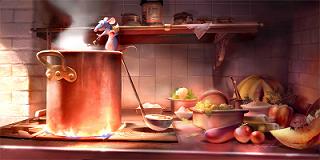 MG: Exactly. One represents who Remy is and the other represents who Remy wants to be. There the very “ratty” theme that’s his reality and then there’s the more wistful theme which is his hopes and dreams.
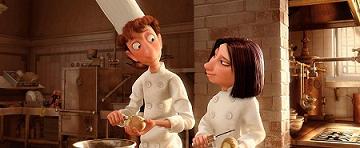 MG: The main part of that theme, which also shows out at the beginning of the end credits, is very confident. It’s almost like a tango-ish thing and in tango, you know that the dancers are always extremely confident, extremely sure of themselves. That’s who she is on the outside. In the kitchen, that’s who she has to be. But then there is a part of her that is a little more romantic, a little bit more unsure, and that’s the inside of her. She’s a very complicated character. She needs to be strong on the outside but the truth is that she is not that person in the inside.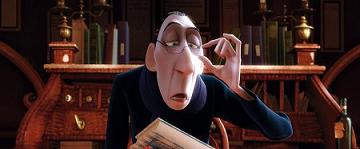
 MG: I always to write the music so that it is tailor-made for a specific moment in the story, you know. There are very specific reasons why each cue is structured the way it is. It’s not just saying: “ok, this is an action scene so I need an action cue”. It’s about knowing what’s going on within the story of that action piece. So I do try to tailor my music really specifically to each individual scene. That’s the way it was for me when I was growing up listening to films scores. It was about re-living the story of the film. So, maybe it’s why I’m so adamant about it, but I enjoyed that as a kid; I loved listening to these score and re-living those stories. It was the only way you could do it when there were no DVDs or videos. If you weren’t in a theater watching the movie, the only chance you had to re-live it was to listen to the music and re-envision it in your head.
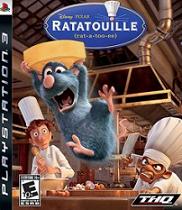 MG: You know, when they do these projects and they throw them out there, they sound nothing like the film does. It’s maybe because I come from videogames, but I try to just stay involved as much as can in the videogames that are produced about the projects that I’m working on. That way, there is a carry-over, they feel like they’re from the same family.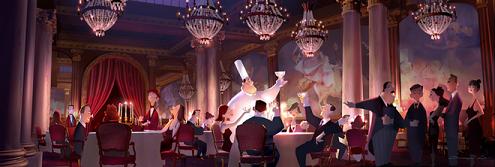
 Enrico Casarosa: Yeah, I’m glad you enjoyed it. It’s just been great to see everybody’s reactions to it.
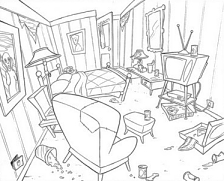 I studied at the School of Visual Arts and Animation, and at the Fashion Institute of Technology in illustration, which actually didn’t have a whole lot to do with animation, but I think to some degree it kind of does, especially fashion illustration which is very creative and full of movement. So then I started working in New York in animation.
 EC: You know I think to a certain degree I felt like I had a certain amount of input, and think the storyboarding was certainly a little bit more fun. It enabled me to convey ideas and go back to things that I loved like beautiful composition and beautiful storytelling; I was always going back and looking at Miyazaki’s work and put that in my work, and there was no way to just do that with design. So it came from a wish to tell stories, and maybe a little bit was from my passion for comics. I’m a big comics fan. It’s storyboarding on the page.
 It was different going to a feature because I was being asked to come up with a situation and write something and invent a story, so it’s kind of a challenge going there, quite a big switch, and it wasn’t easy to make. But it certainly was worth it, for me in my career, where without that job I would never have made it to where I am now at Pixar.
 EC: The way I arrived at Pixar is kind of interesting. I was making comics with a few friends, and Ronnie Del Carman, who’s become a very good friend here, and who is head of story here at Pixar and was head of story on Finding Nemo at the time, he knew my work from comics. We started exchanging emails and kind of became friends, and then a position opened for Ratatouille. He was good friends with Jim Capobianco who was the head of story, for Ratatouille at the time, and he said ‘well maybe you should send in your portfolio’. So I sent in the portfolio and then after an amount of time – it wasn’t right away, it was around six months – waiting for the right time for the company to be up and running on it, and I think Jim was the only person working on Ratatouille at the time, so I was the first story artist to join them and certainly in that job of starting development. And they probably figured the fact I was European that it would probably help me storyboard a movie set in Paris. So I started work on it and things came out from there.
 It was always such a non-visual concept so some of the first challenges were to do with how do we show things and make them amazing, and that’s how we started brainstorming ideas like flashbacks and things like that, but it was a very exciting time. When Brad Bird came on board and took over, having him seeing it made us re-reach, and he added some amazing writing, so it was eventually pretty organic. It was pretty long, I was on it for four years, but at Pixar here we just take so much time to tell the best story we can. I think that it was a good story and then they wanted it to be an amazing story, and Brad really made it sing.
 AV: So when the scripts arrive, they’re not set in stone, they’re still open to any other ideas, be they visual or humoristic, as long as they add to the intended story?
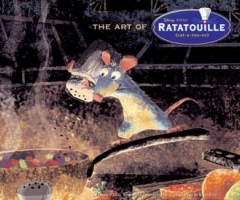
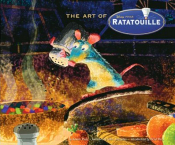 EC: At the beginning there were some pretty good designs, and you can see a lot of them in The Art Of Ratatouille. They were still preliminary, so there is no actual set-in-stone design, but you have a pretty good idea from simply following the descriptions, for example Carter Goodrich, who was doing large parts at the beginning of design, and so we were all pretty clear…he did beautiful renderings of the cooks. They changed a bit throughout the design process, of course there are great designers and sketch artists here that draw in their kind of own way so they pass through designers and then certainly again into the 3D character. So there’s a little bit of change but we did have a certain amount of direction from the illustration. That can vary, you know, sometimes we have just one drawing or one little sketch, and storyboarding is very unique because not everything is exact or the best quality, because very often the model is still being tweaked. But we did have pretty good designs and Carter Goodrich’s work really stood out on Ratatouille.
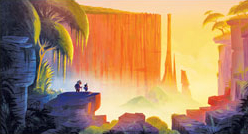
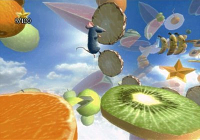 It was originally a very silly dream sequence, of course, for Rémy, but we wanted it to be valid and it was great to bring something of Miyazaki about it…we had flying colanders and he was flying in the sky with steam clouds. We had ideas of a Winter Wonderland where he would be making snow angels in sweet sugar, so that’s what some of the drawings in the book are. It was really a lot of fun to try, and we went in many directions, with crazy cooking and I think seriously it stayed in the video game in the part where you’re running around in the sky!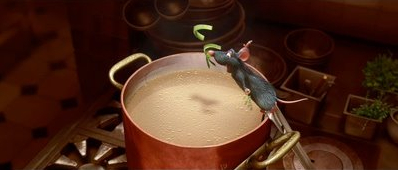
 EC: Once I arrived at Pixar I immediately got started talking about books, comics, things I have a passion about. I had a little experience because I had self-published some comics, and Ronnie knew about that work, and his interests were the same, so we started collaborating and using the same printers I had been using. We made a book of all our sketches and figure drawings together, and it’s been a ton of fun…we’ve gone more than a couple of times to the Comic-Con, in San Diego, so it’s really about having another outlet for our creativity. The
  I’ve also just finished
  AV: So this openness must contribute to the unique feel of Pixar’s films?